Steady comfort through every season.
As an HVAC contractor Staten Island homeowners call for both the July heat and the February cold, we handle the full system — cooling in the summer, heating through the winter, and the air quality in between. From row houses near St. George to detached homes out in Tottenville and Annadale, the borough runs everything from old cast-iron boilers to newer high-efficiency heat pumps, and each needs a different hand. Search "HVAC near me" here and you want someone who knows a Staten Island basement, not a call center two states away.

Tell us about your hvac contractor job — we'll get you a fast quote.
A firm, all-in price confirmed before we start — no surprises.
On time, done to standard, and tidy when we leave.
Reach a real Staten Island hvac contractor technician to describe the problem — no call-center runaround.
We look at the actual system and explain what is going on before any work.
You get the price for the fix up front and decide before we proceed.
Serving Staten Island and the surrounding area — confirm coverage by phone.
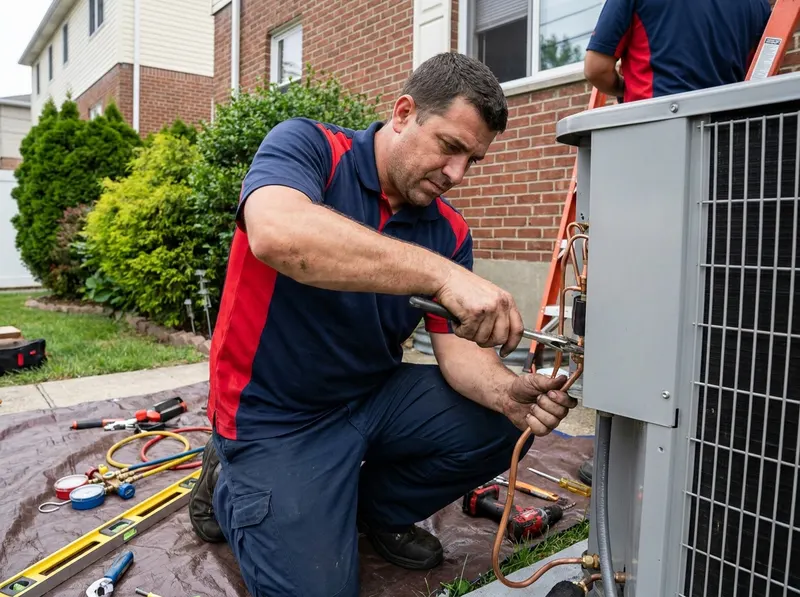
New central AC systems sized to the actual square footage and layout of your Staten Island home — an oversized unit short-cycles and never dehumidifies, so correct sizing matters when a house has additions or a finished basement. We run a load calculation instead of matching whatever tonnage the old unit was, set the condenser on a level pad, tie in refrigerant lines, and confirm airflow at the registers before we leave. Homes near the East Shore water get a condenser placement that keeps salt spray and standing leaves off the coil, which is what wears units out early here.
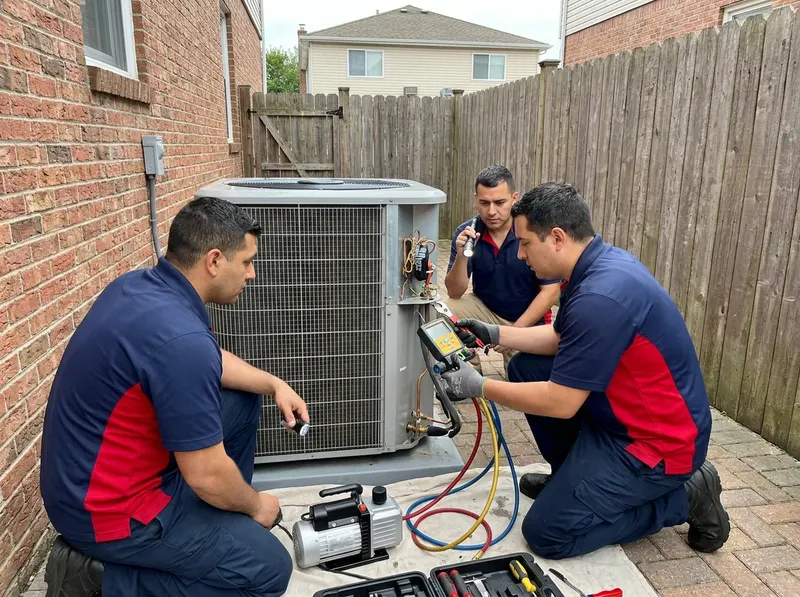
Same-day diagnosis and repair for AC that blows warm, trips the breaker, or freezes up — most common failures on the island are a bad capacitor, a low charge from a slow leak, or a clogged condensate line backing up in a humid July basement. We test the capacitor and contactor first because those are cheap, fast fixes, then check refrigerant pressures and the drain line before recommending anything larger. If the compressor itself is gone on an aging unit, we lay out the repair-versus-replace math honestly instead of quietly upselling a whole system.
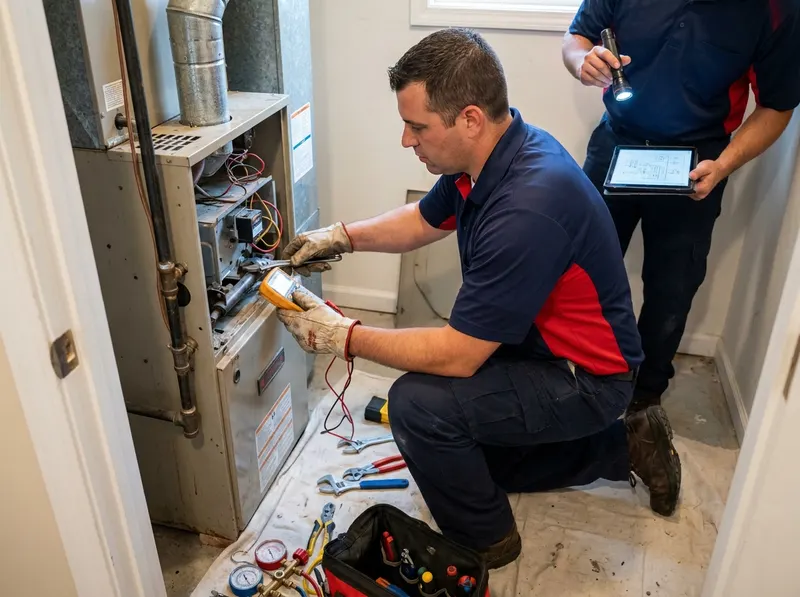
Gas and oil furnace repair, replacement, and safety checks. A furnace that won't ignite or short-cycles usually needs a flame sensor, igniter, or control board; we test for cracked heat exchangers because that matters the moment carbon monoxide is a risk in a tight, closed-up winter home. On installs we match the furnace to the ductwork and gas line already in the house and check that the flue draws properly — an oversized furnace on undersized ducts is a common reason a replacement never feels better than the unit it replaced.
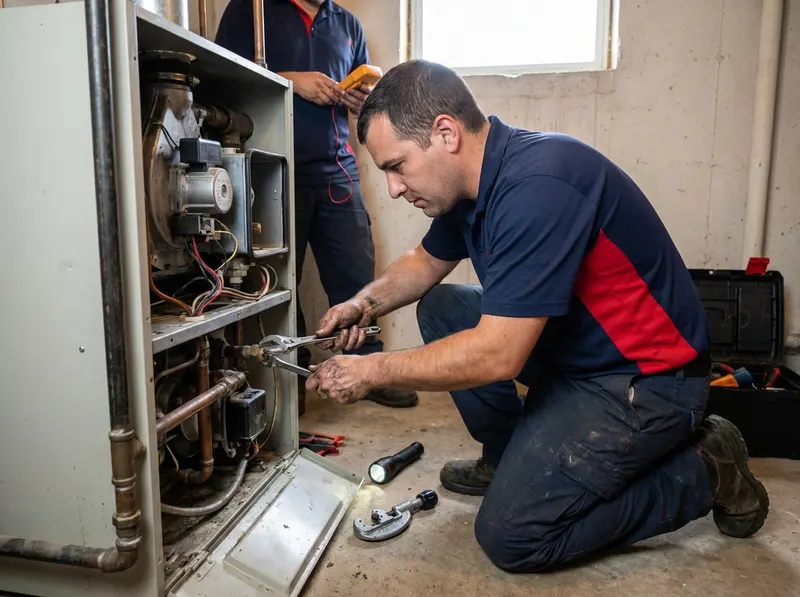
Steam and hot-water boiler service for the many older Staten Island homes still on cast-iron systems near Stapleton, West Brighton, and Port Richmond. We handle no-heat calls, low-pressure faults, leaking valves, waterlogged expansion tanks, and full high-efficiency boiler swaps when an old unit is past rebuilding. Steam systems need the right pressure and clean water lines to heat evenly, so we check the low-water cutoff and skim the boiler rather than just relighting it and hoping.
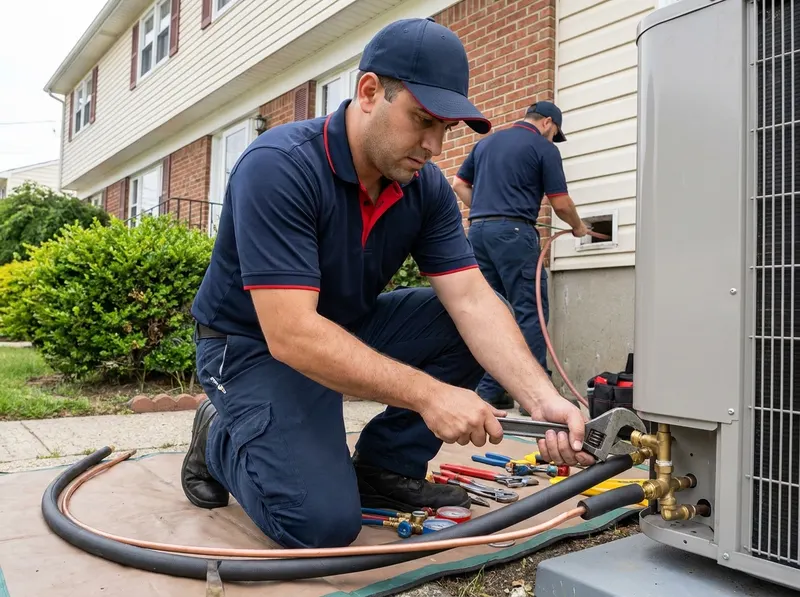
High-efficiency heat pumps that both heat and cool from one system — a strong fit for homeowners looking to cut oil costs. Cold-climate models hold output through a Staten Island winter, and they qualify toward federal energy tax credits worth up to $2,000. We review the existing electrical panel because a heat pump often needs a dedicated circuit, and we can pair it with backup heat so a rare deep cold snap never leaves the house short. For an all-oil home, this is usually the single biggest monthly-bill change we can make.
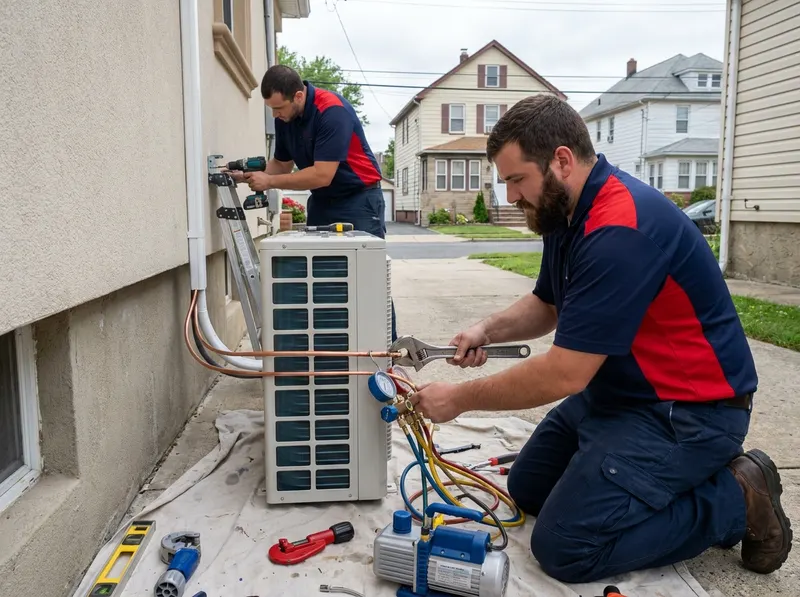
Ductless mini-splits for additions, finished attics, converted garages, and rooms that never got comfortable — no ductwork needed, which matters in older homes where running new ducts means tearing into finished plaster. A single outdoor unit can drive several indoor heads on separate thermostats, so a stuffy back bedroom and a hot sunroom each get their own temperature. These also work as a low-cost path off electric baseboard or window units in row homes with no room for ducts.
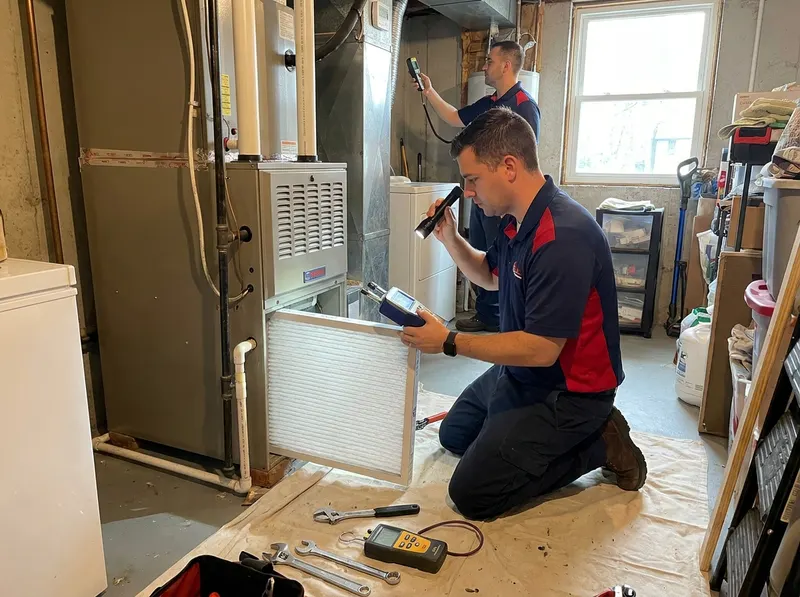
Whole-home air filtration, humidifiers, and UV treatment tied into your existing system. Sealed-up winter homes near the water trap dust, dry air, and allergens, and better filtration matters when someone in the house has asthma or seasonal allergies. A media filter catches far more than a one-inch throwaway filter, a whole-home humidifier stops the dry-throat winter air and static, and UV lamps keep the coil and drain pan from growing the mold that dead-of-summer humidity feeds.
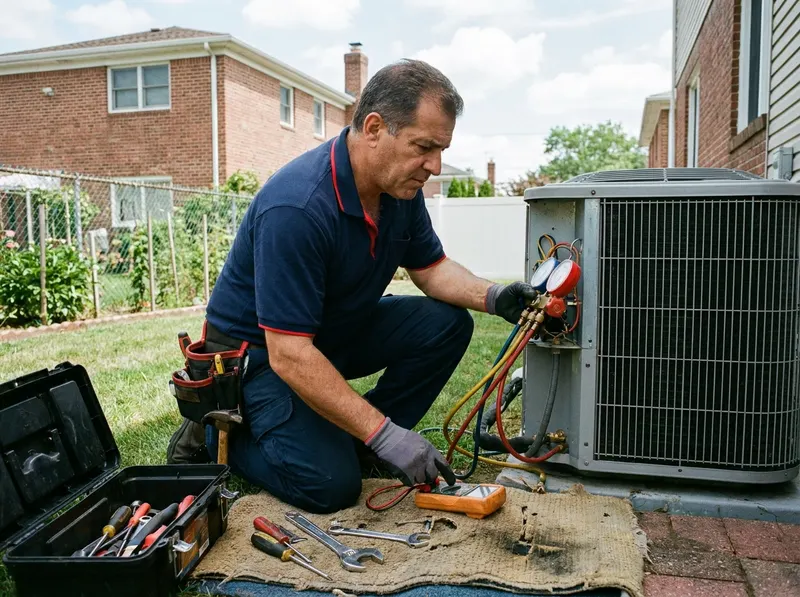
Seasonal maintenance for heating and cooling — clean coils, tested capacitors, checked refrigerant, verified safety controls, and a fresh filter. A spring AC tune-up and a fall furnace check catch small failures before they become a no-cool August or no-heat January call. On the heating side we test the flame sensor, inspect the heat exchanger, and confirm the carbon monoxide reading is clean; on the cooling side we check the charge and clear the condensate line so it doesn't overflow in July.
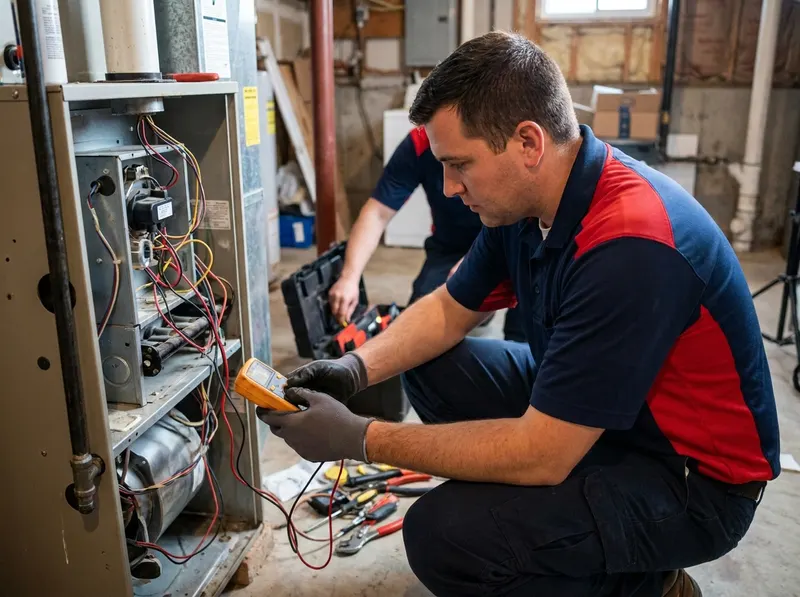
Same-day emergency service for the calls that can't wait — a furnace that quit in a February cold snap or an AC down in an August heat wave. We prioritize no-heat and no-cool emergencies across the borough and carry the common failure parts so many calls are fixed on the first trip. Text a photo of the unit and its model plate before we arrive and we can often bring the right igniter, capacitor, or control board with us instead of making a second trip.
If your furnace or AC is under 12 years old and the failure is a single part, choose a repair — it is the lowest cost and gets heat or cooling back the same day. If the system is 15-plus years old and hitting a second or third breakdown, choose a full replacement; the trade-off is a larger upfront cost against years of lower energy bills and no repeat repair calls. If you run oil heat and want to cut fuel costs, a high-efficiency heat pump or gas conversion fits, but the trade-off is upfront equipment and the electrical or gas line work a conversion needs. If you only want steady comfort and fewer surprise failures, choose a seasonal maintenance plan — the trade-off is a small recurring cost for tune-ups that catch a failing capacitor or a cracked heat exchanger before it strands you in a cold snap. For a single stuffy room or a finished attic with no ducts, a ductless mini-split fits far better than extending old ductwork; the trade-off is a visible indoor head unit versus the mess and cost of running new duct runs. If two floors never balance and one is always too hot, choose a zoned system or a second condenser over one oversized unit; the trade-off is more equipment against comfort in every room and lower short-cycling wear. And if your bills are creeping up but the equipment still runs, choose an efficiency audit and duct sealing first — the trade-off is a modest inspection cost against catching leaky ducts that waste a quarter of what you heat or cool before you spend on new equipment.
| On-site diagnostic / minimum service visit | from $150 |
| AC repair (capacitor, sensor, minor fix) | $150 – $450 |
| Furnace repair (igniter, flame sensor, control board) | $150 – $600 |
| Boiler repair (valve, low-water cutoff, pressure fault) | $200 – $700 |
| Seasonal tune-up (heating or cooling) | $150 – $250 |
| Refrigerant leak repair & recharge | $300 – $900 |
| Condensate line clearing / drain repair | $150 – $350 |
| Whole-home humidifier install | $500 – $1,200 |
| Media air filter / UV coil treatment install | $400 – $1,500 |
| Central AC system replacement | $5,500 – $12,000 |
| Gas furnace replacement | $4,500 – $9,500 |
| Boiler replacement (steam or hot-water) | $6,500 – $14,000 |
| Heat pump installation (before tax credits) | $7,500 – $16,000 |
| Ductless mini-split (per zone) | $3,500 – $6,500 |
Call for a firm, all-in price before any work begins.
We give an upfront, written price before any work begins — you approve it first. No surprises.
Our work is done to standard and we stand behind it — a real fix, not a quick patch.
We’ll give you an honest assessment. If you don’t need the work, we’ll tell you.
Staten Island's housing runs older and mixed — brick row homes near the Ferry Terminal and Stapleton, detached Colonials and split-levels through New Dorp, Great Kills, and Eltingville, and a lot of the borough still on oil heat with cast-iron boilers that predate the newer subdivisions out toward Annadale and Tottenville. Homes on the East Shore near the water fight humidity and salt air that wears condensers faster, so where a unit sits and how it's protected matters as much as the brand on it. Tight winter homes trap dry, dusty air that a humidifier and better filtration fix, and the same sealed-up construction is exactly why a cracked heat exchanger is a safety issue worth testing for every fall. Because so much of the island still heats with oil, a heat pump or gas conversion is often the single biggest bill-cutter we can install, and the federal tax credit worth up to $2,000 makes the upgrade land closer than most owners expect. The borough also mixes narrow row-home mechanical rooms near St. George with roomier basements out near Willowbrook and Freshkills Park, so equipment sizing and access are never one-size-fits-all — the layout that fits a detached home in Great Kills is wrong for a shared-wall home closer to the ferry.